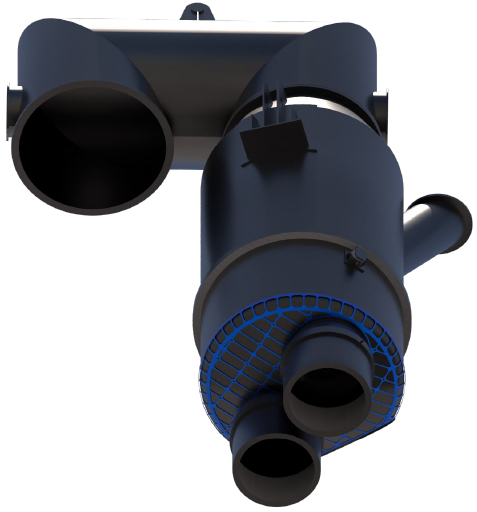
Smart RH Vessel
The Smart RH Vessel is an intelligent real-time monitoring system that
continuously tracks the lower shell temperature of the RH vessel unit
during steelmaking operations. Developed by EXCELLO, the system uses
surface temperature sensors to instantly detect temperature changes on
the vessel sell, allowing operators to predict and prevent refractory
wear or equipment failure before they occur.
The Smart RH Vessel System extracts and transmits data in real-time.
The traditional RH Vessel system does not generate any data, so in order
to monitor the status of the RH Vessel (temperature, location), workers
had to physically access it or assess it from the outside. Consequently,
the data that could be gathered was very limited and the reliability of
the temperature data was very low.
The Smart RH Vessel System transforms the traditional RH Vessel into smart equipment.
It allows for real-time monitoring of the RH Vessel surface temperature,
analyzing data on the wear of the refractory material inside the equipment, data on locations with
high heat emission, and the overall energy loss rate of the
equipment. Additionally, it enables real-time tracking of the RH Vessel location.
The lower part of the RH Vessel experiences rapid refractory erosion due to the upward and downward
movements caused by molten steel stirring, resulting in
frequent occurrences of lower vessel punctures due to refractory loss. We aim to address refractory
loss and prevent puncture occurrences by monitoring the surface
temperature of the lower vessel in real-time.
| Data | DX |
|---|---|
|
|
Smart RH Vessel Monitoring
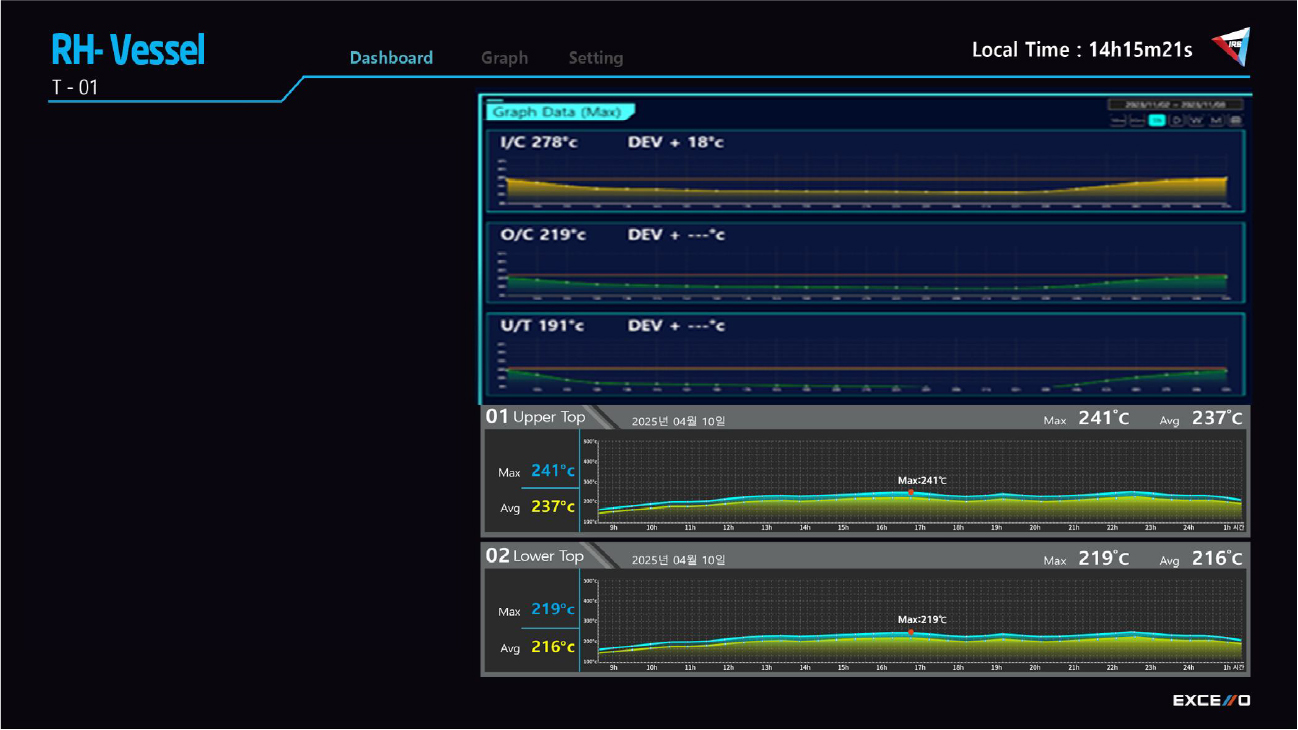
Surface Temperature Sensing Data
Surface temperature data is continuously collected from the RH vessel to monitor thermal conditions during vacuum refining operations
Energy Loss
Heat radiation data is measured to identify thermal dispersion and temperature deviation across the vessel surface
360° Temperature Profile
Multi-point sensing data is integrated to generate a complete surface temperature distribution of the RH vessel
Temperature Trends History Data
Temperature data is accumulated over time to build historical trend records for long-term condition tracking and analysis.
Benefits
 Safety
- Monitoring surface temperature during vacuum treatment helps identify abnormal heat concentration inside the vessel
- Continuous condition monitoring reduces operator exposure during vacuum and lifting operations
- Early detection of thermal imbalance supports safer handling of molten steel under vacuum conditions
- Visualized temperature status enables faster response to abnormal operating situations
 Productivity Improvement
- Stable vessel thermal conditions support consistent decarburization and degassing performance
- Reduced thermal fluctuation minimizes process disturbances during the operation
- Condition-based operation improves overall process reliability
- Improved operational predictability supports smoother production scheduling
 Cost Reduction
- Thermal pattern analysis helps avoid localized refractory overuse in critical vessel areas
- Early identification of abnormal heat dispersion reduces corrective maintenance costs
- Maintenance activities can be planned based on actual vessel condition rather than fixed intervals
- Improved refractory utilization extends vessel service life