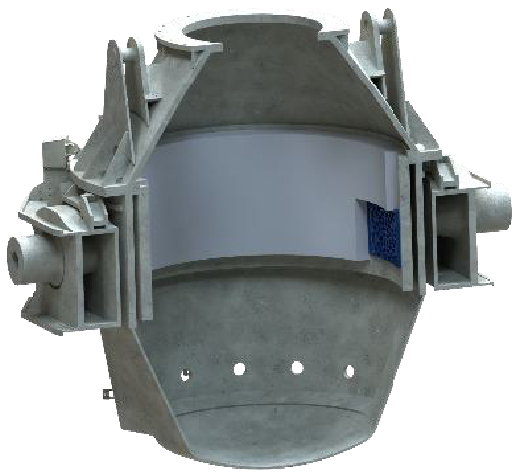
Smart AOD
The Smart AOD Monitoring System extracts and transmits data in real-time. The traditional AOD does not generate any data, so in order to monitor the status of the AOD, workers had to physically access it or assess it from the outside. Consequently, the data that could be gathered was very limited, and the reliability of the data temperature was very low.
| Data | DX |
|---|---|
|
|
Smart AOD Monitoring
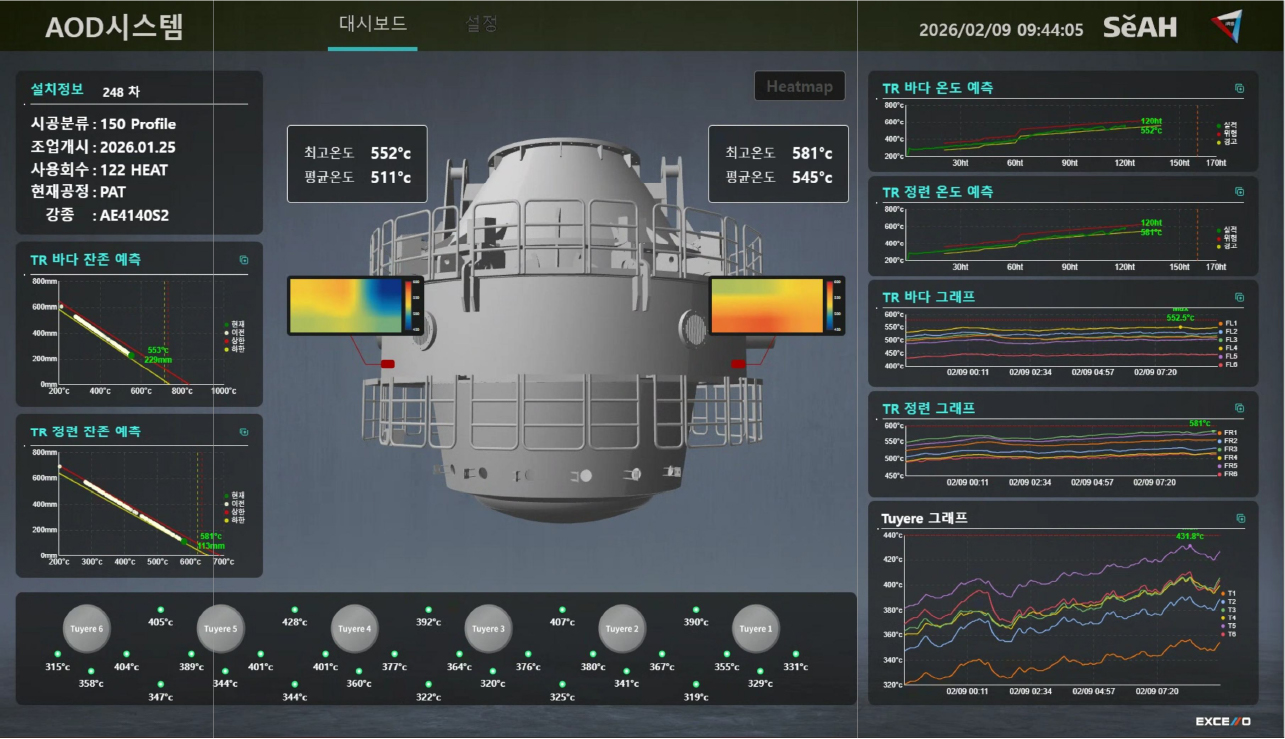
Surface Temperature Sensing Data
Surface temperature data is continuously collected from the equipment surface and visualized in real-time for condition monitoring
Energy Loss
Heat radiation data is measured and quantified to identify thermal dispersion across the equipment surface
360° Temperature Profile
Multi-point sensing data is integrated to generate a full surface temperature distribution map
Temperature Trends History Data
Temperature data is accumulated over time to build historical trend datasets for analysis
Benefits
 Safety
- Real-time surface temperature monitoring enables early detection of abnormal thermal stress on the converter shell
- Identifying localized overheating reduces the risk of refractory failure during refining operations
- Continuous monitoring minimizes the need for close-range manual inspection in high-temperature zones
- Improved thermal visibility supports safer decision-making during oxygen and argon blowing
 Productivity Improvement
- Stable thermal conditions help maintain consistent refining reactions throughout the AOD process
- Early identification of abnormal heat patterns reduces unplanned process interruptions
- Improved equipment condition monitoring supports smoother and more predictable operation cycles
- Reduced thermal fluctuation contributes to improved refining efficiency and operational continuity
 Cost Reduction
- Data-driven analysis helps prevent excessive refractory wear and premature damage
- Optimized maintenance timing reduces unnecessary shutdowns and repair costs
- Early detection of heat loss supports more efficient energy use during refining
- Extended equipment service life lowers long-term operating and replacement costs